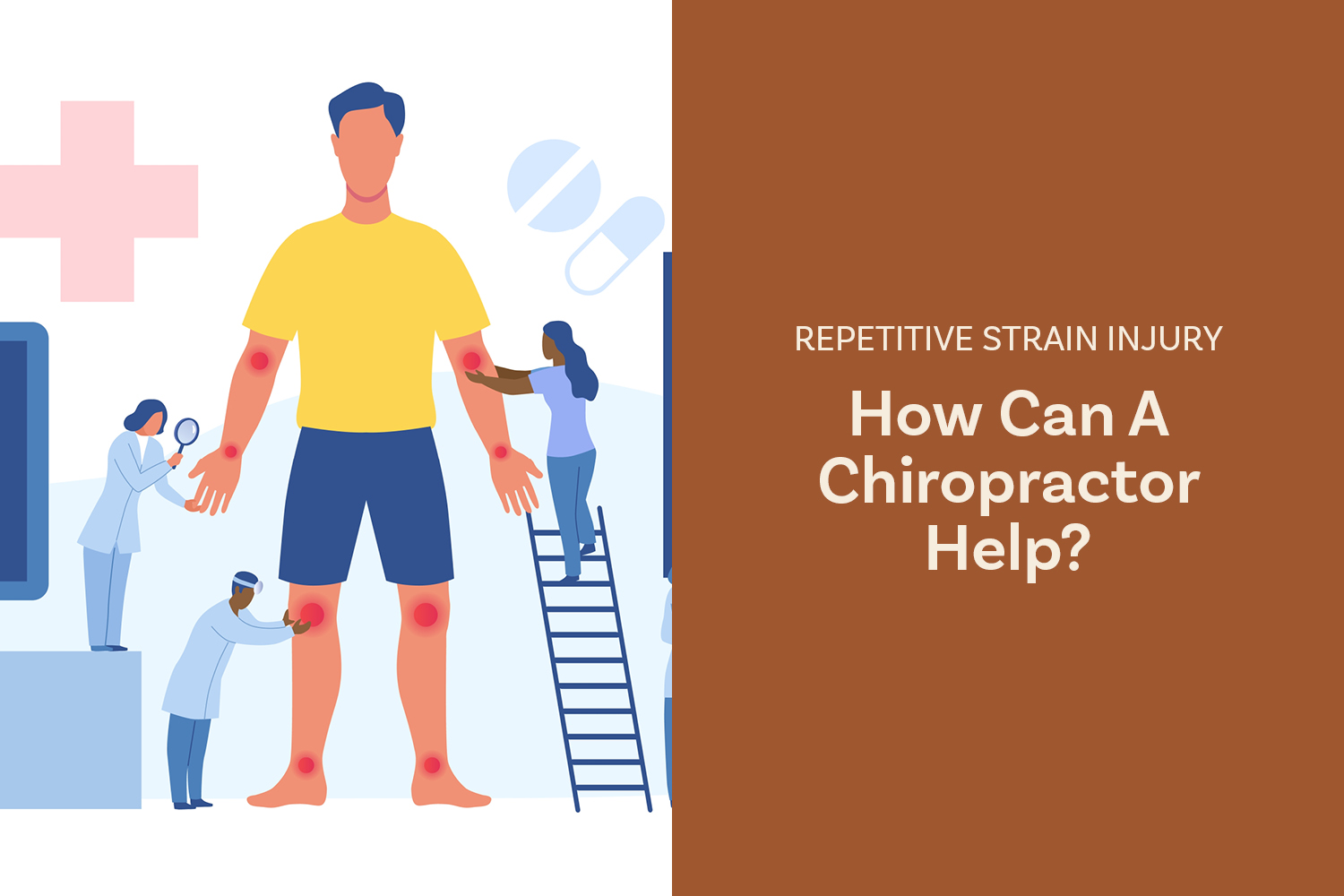
Repetitive Strain Injury, or RSI, feels like a nagging discomfort in the wrist, elbow, or hand. It doesn’t come from one big accident, but rather creeps in slowly over time.
Specifically, it’s the result of thousands of small, repeated movements we perform every day, some of which we may not even be conscious of doing. Common examples include typing, using a mouse, or working with tools.
While it’s natural to focus on the part that hurts, the discomfort often tells a story about your entire upper body. Which is why we look at the whole kinetic chain from your neck to your fingertips.
An RSI is the result of cumulative micro-trauma. This type of trauma happens when the demands placed on your muscles and tendons outpace their ability to recover. Think of it like a single drop of water on a stone. One drop has no effect, but thousands over time will leave a lasting mark.
In the case of conditions like RSI, performing the same actions over and over without enough rest leads to irritation. This can eventually turn into persistent pain that interferes with both your work and leisure.
When your tissues are constantly working, they can develop tiny micro-tears.
Your body is usually brilliant at repairing this kind of wear during rest. However, if the stress continues without a break, the rate of damage exceeds the rate of repair. Your body then tries to protect the area by tightening the surrounding muscles.
That response in turn can restrict blood flow and trap inflammation, hindering the healing process. And, like water dripping onto a stone, the cycle of strain and guarding eventually turns a minor irritation into a chronic problem.
Here’s the thing, though…
The health of your hands and arms is directly connected to your neck and upper back. For example, the nerves that control your arms originate from your cervical (neck) spine.
And should your upper torso posture become compromised, it changes the mechanics of your entire arm.
So, whilst it might seem unconnected, rounded shoulders or a forward head position can place an unnatural load on your delicate wrists and hands. Essentially, your arm is forced to compensate for a lack of stability or movement in your spine and shoulders.
A chiropractic approach to RSI looks at the source rather than just the symptoms. We assess the movement and alignment of your neck, upper back, shoulders, and elbows.
Then, using gentle, specific adjustments, we aim to restore healthy motion to any restricted joints. This helps take pressure off the nerves that supply your arm.
When the foundation of your spine is working well, your smaller joints don’t have to work as hard. This improves the overall mechanical efficiency of your upper body.
While care in the clinic creates ideal conditions for healing, it’s also powerfully supported by the small changes you make to your daily habits.
To help facilitate this, we work with you to identify specific repetitive patterns that contribute to your strain. We’ll also offer practical advice as required on ergonomics and taking regular movement breaks.
The key is to build awareness of how you use your body. When you understand that, you can then interrupt the patterns of overuse before they lead to further pain.
Our ultimate goal is to help you build a resilient body that can more easily handle the demands of your work and hobbies.
Supporting the relationship between your spine and your limbs helps your body self-regulate. It creates sustainable patterns of movement moving forward. You become more empowered to work and play with freedom and comfort, and are less likely to develop conditions like RSI.