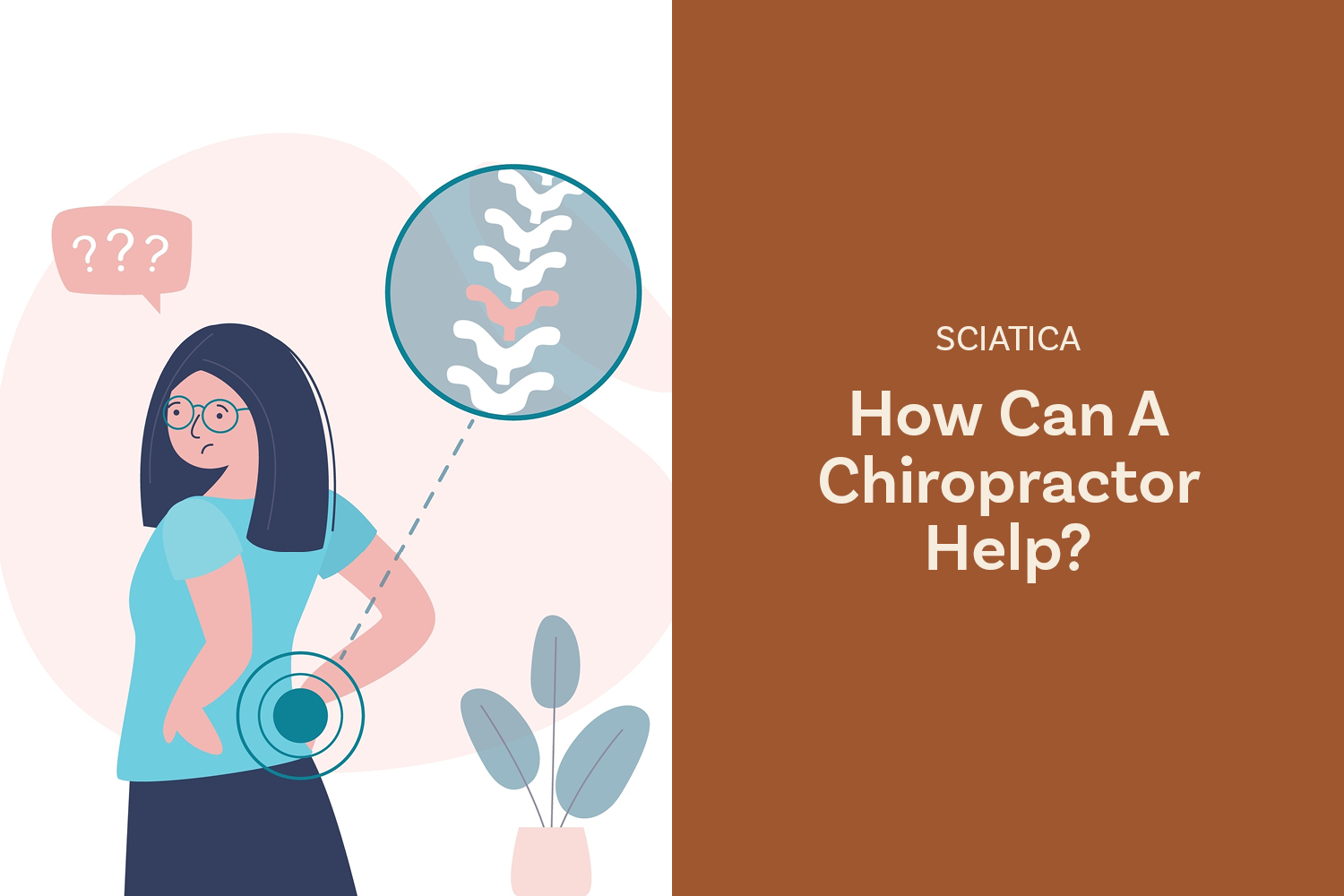
Sciatica is a uniquely disruptive type of pain. It’s often described as a sharp, shooting sensation that can travel from the lower back down through the buttocks and into the leg. But it can also present as a dull ache, or a tingling pins and needles type sensation in your legs.
Regardless of what it feels like, sciatic pain can make simple acts like walking or even sitting feel unbearable.
While the pain is felt in the leg, the story of sciatica almost always begins in the lower back and pelvis. Our work focuses on understanding this origin story. It’s about gently addressing the underlying mechanical issues to support your body’s powerful ability to heal and restore comfort.
It’s helpful to know that sciatica isn’t a diagnosis in itself. Instead, it’s a word used to describe the symptoms that occur when one of your sciatic nerves becomes irritated. These are the longest and thickest nerves in your body.
You have two of them, each originating from several nerve roots in your lower back before travelling through your pelvis and down the back of each leg.
When something puts pressure on one of these nerves at its source, it sends protest signals along its entire length. This is why you feel the sensation so far from the actual site of irritation.
Here’s the thing, though: the problem doesn’t always originate at the spine. Irritation can happen anywhere along the length of these nerves as they travel through your body. For instance, as they move through your hips, they must pass through various muscles and tissues.
If these tissues become tight, they act like a physical bottleneck. This creates a “short circuit” where the nerve is being squeezed at one or more points along its journey.
A common example of this is Piriformis Syndrome. The piriformis is a small muscle located deep in the buttocks, right behind the hip joint. In many people, the sciatic nerve runs directly underneath, or sometimes even through, this muscle.
If the piriformis becomes tight or spasms, it can compress the nerve. This mimics the feeling of a “slipped disc” in the back, even if the spine itself is moving fine.
The tingling or “echo” you feel is just your body’s way of signalling interference. It tells us there’s a block somewhere along the nerve’s communication highway.
The chiropractic approach to sciatica is focused on improving the function of your spine and pelvis. We aren’t chasing the pain down your leg; we’re addressing the source of the irritation, whether it’s in the lower back or the hip.
Through gentle, specific adjustments, we aim to restore healthy movement to the restricted joints. This can help to reduce the physical pressure on the sciatic nerve root.
The goal is to create space and calm the nerves, removing the interference so your body can begin to heal. This allows the nervous system to return to a state of quiet and ease.
The adjustment creates a window of opportunity for your body to recover. We support this process with guidance on gentle movement and supportive positioning.
This might include specific stretches to release tension in muscles that could be contributing to the compression, like the piriformis.
We also offer advice on how to sit and sleep in ways that minimise nerve irritation. These active steps empower you to participate in your own recovery. It’s about making the new, healthy patterns stick in your daily life.
Our ultimate goal is to move beyond immediate relief and toward building long-term resilience. By addressing the underlying mechanical patterns, we help reduce the likelihood of the pain returning.
It’s about supporting your body’s innate ability to adapt and function at its best. We want to help you regain confidence in your movement.
This allows you to return to the activities you love with a renewed sense of freedom and vitality. True health isn’t just about stopping the pain, but about restoring your capacity to thrive.