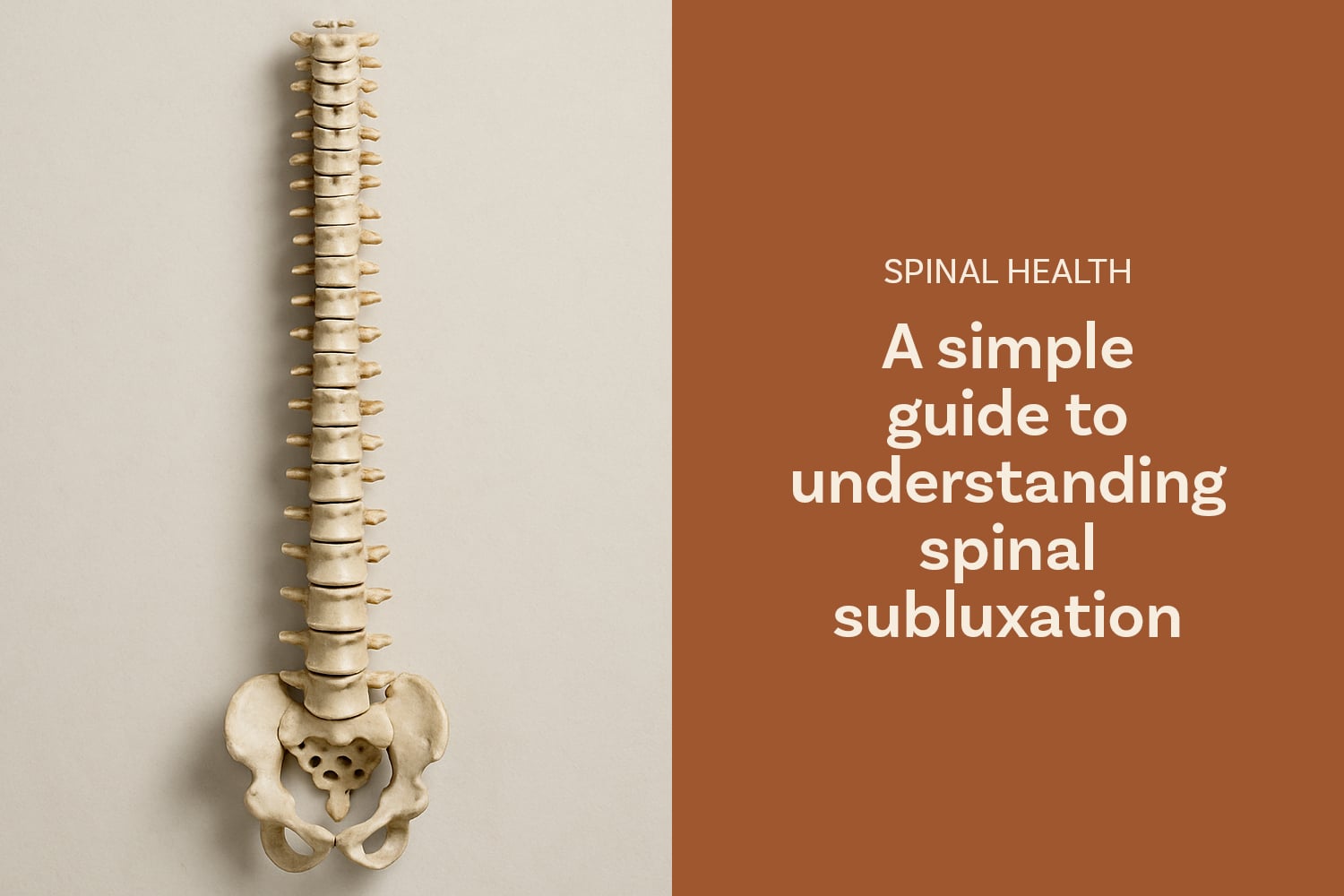
The spine is constantly moving.
Every time you turn your head, reach for something, or shift in your chair, small joints along the spine adjust to guide the movement. Most of the time, this happens smoothly and without effort.
Occasionally, a segment of the spine might not move as freely as it normally does. Chiropractors describe these patterns using the concept of subluxation, a term that appears throughout early chiropractic texts and remains central to the profession’s philosophy.
In this context, the word refers to changes in spinal motion and the way those changes may influence how the body functions.
In chiropractic, a subluxation refers to altered movement or alignment within a spinal segment. It isn’t a dislocation or a medical emergency. Instead, it describes a situation where a joint isn’t moving as comfortably or as freely as it could.
Early texts described subluxation as a state in which the spine loses some of its normal coordination. Modern explanations often focus on several related features:
Together, these elements describe a pattern where movement, muscle activity, and signalling are no longer working together as smoothly as they normally would.
The spine protects the spinal cord and forms an important pathway for information travelling between the brain and the rest of the body. Movement in the spine influences the signals that pass through this system.
When a spinal segment becomes restricted, surrounding tissues often respond in ways that can affect this signalling process. Muscles may tighten, joint movement can become less fluid, and the sensory signals travelling toward the brain may change.
Chiropractic philosophy refers to this as neurological interference. The term doesn’t suggest injury or damage. It simply describes a situation where the signals involved in posture, movement, and physical awareness may not be as clear as they normally are.
Chiropractic philosophy often groups the influences on spinal health into three broad categories of stress.
Over time, these different stresses can shape the way the spine moves and how easily it maintains comfortable motion.
Chiropractic adjustments are precise movements applied to specific joints in the spine. The intention is to support natural motion where it has become restricted.
When a joint begins moving more freely, surrounding muscles often reduce their effort. Movement can feel smoother, and the signals travelling between the body and the brain may become clearer.
Adjustments don’t force the body to change. They provide a brief, specific input that allows joints and muscles to move in a more natural way.
Subluxation reflects the idea that the spine plays a central role in how the body coordinates movement and responds to everyday demands. When spinal motion is comfortable and unrestricted, posture, balance, and movement tend to feel easier.
Chiropractic focuses on maintaining that freedom of movement. Improving how spinal joints move, it helps the body respond to physical, emotional, and environmental stresses with greater ease.