Nobody teaches a baby how to roll over.
It happens through repeated attempts, small failures, and gradual adjustment, long before any instruction could explain how to do it. Watching this process closely reveals something about how movement develops, adapts, and changes throughout life.
This idea is central to understanding movement from a chiropractic perspective. The patterns we develop as children, from the way we sit and stand to the way we walk and reach, continue to influence how we move as we grow.
Rolling, crawling, and eventually walking all develop in a fairly consistent order, but never at exactly the same pace. Each stage builds on the strength, coordination, and confidence developed before it.
Much of this learning happens through exploration rather than instruction. A baby reaching for an object will try, adjust, and try again, gradually discovering how to shift weight, control movement, and achieve the result they want.
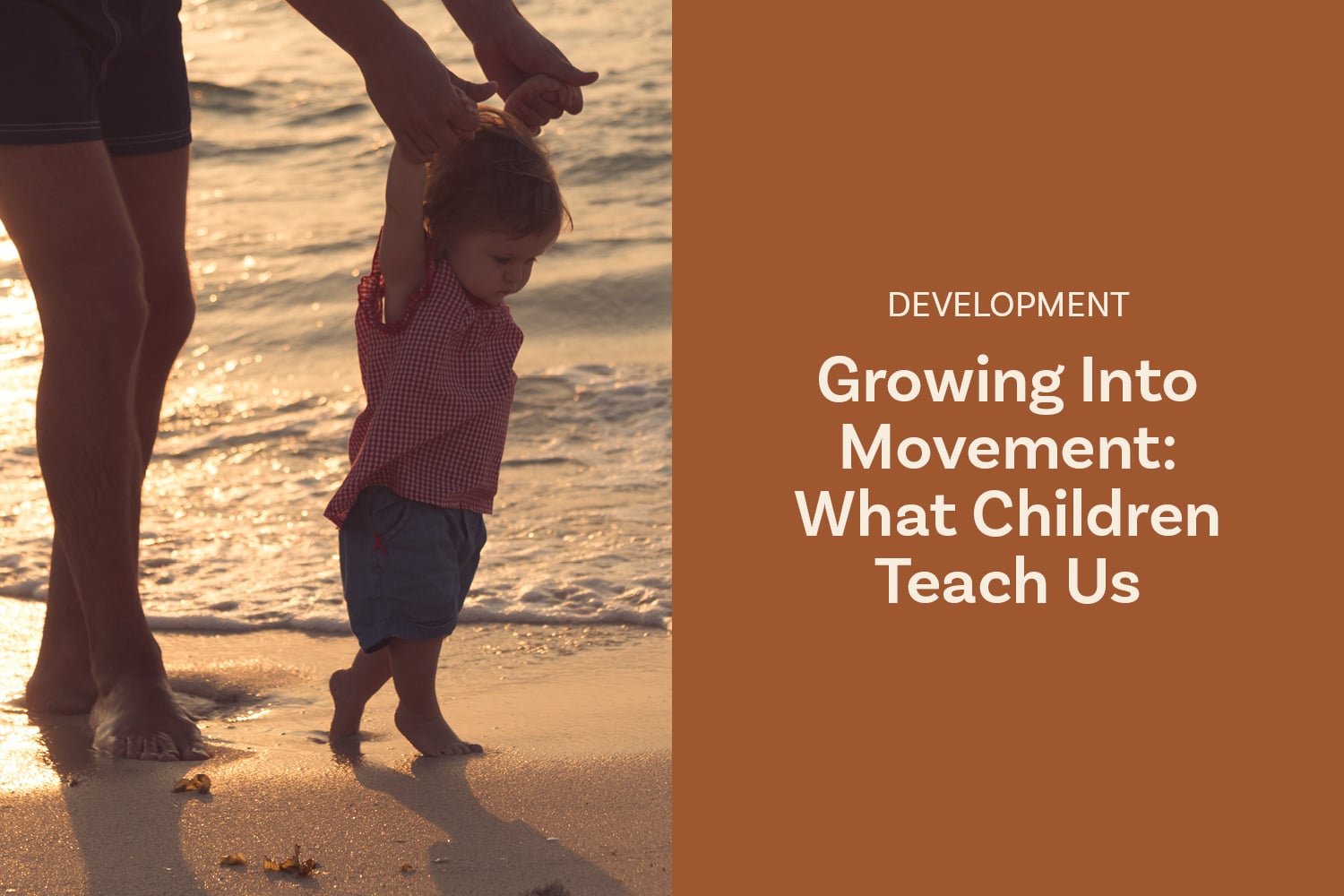
There’s rarely a perfect first attempt. Rolling may happen more easily to one side than the other. Crawling can take several different forms. Early steps are often uncertain and uneven.
These variations aren’t mistakes. They’re part of how our movement patterns develop, allowing the brain and body to learn what feels stable and what needs adjusting.
Children seldom move simply for the sake of practising movement. They move because something interests them.
Reaching for a toy just out of arm’s length, crawling towards an interesting sound, or climbing to see something from a different height all provide a reason to explore.
That curiosity exposes them to a wide variety of positions and movements. Each new experience gives their brain more information about what the body can do and how to respond to different challenges.
This process doesn’t stop once we learn to walk.
Throughout life, we continue adapting our movement, whether learning a new sport, changing how we move after an injury, or simply responding to the demands of daily life.
The difference is that adults often repeat the same patterns more frequently. We sit in familiar positions, walk on familiar surfaces, and perform familiar tasks, which can reduce the variety of movement experiences we encounter.
Learning doesn’t always mean mastering something completely new. It can be as simple as discovering a more efficient way to lift a box, becoming more comfortable on uneven ground, or improving coordination through practice.
Our ability to adapt doesn’t disappear with age. It continues whenever we challenge our body with new experiences.
The way children learn movement offers a useful reminder that progress comes through curiosity, repetition, and adjustment rather than perfection.
This is something a chiropractor may consider when assessing movement. Rather than looking at movement as something fixed, they can observe the patterns someone has developed over time and how different parts of the body are coordinating together.
The aim isn’t to compare someone’s movement with a perfect version. It’s about understanding how their experiences have shaped the way they move today.
Children show us that movement is learned through curiosity. Every attempt provides another opportunity to adapt, refine, and discover what works.
Bringing a little of that same curiosity into adult life can be valuable too. Trying a new position, taking a different route, or simply paying attention to how something feels keeps our relationship with movement evolving.