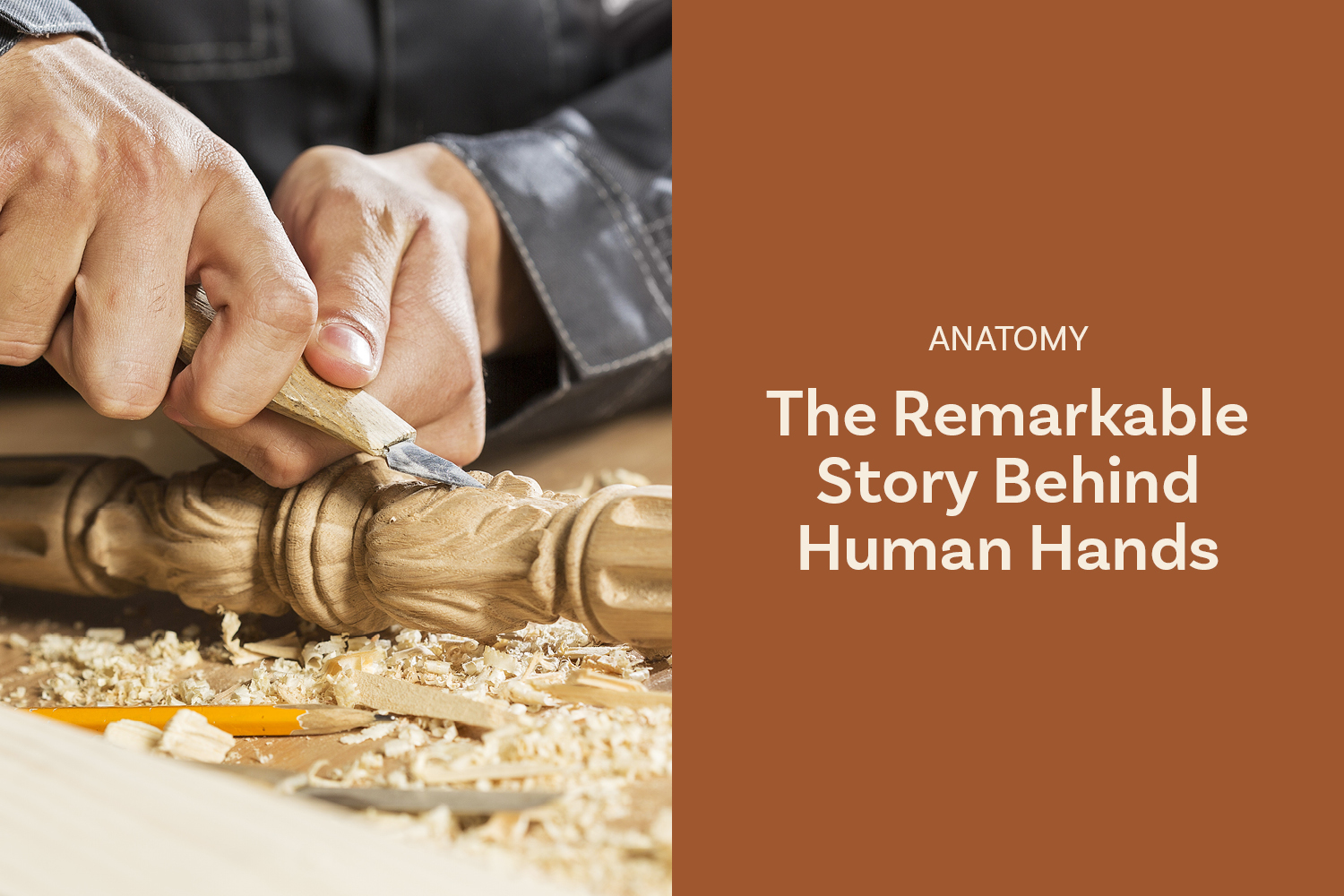
The human hand is a remarkable example of evolutionary adaptation, with a story that stretches back millions of years.
They’re also very easy to take for granted. After all, they can open jars, hold pens, thread needles, and shape clay without us giving much thought to how they do it.
What we often don’t realise, however, is that the hand’s function doesn’t begin and end in the fingers. It relies on a wider system of nerves, joints, and movement patterns.
While the hand performs the final task, the precision behind its movements depends on coordination throughout the neck, shoulders, and upper body.
These relationships form part of the broader way movement is understood from a chiropractic perspective.
The human hand contains twenty-seven bones, along with a dense network of muscles, tendons, and nerves, all packed into a relatively small space. This structure allows an extraordinary range of movement, from a firm grip to the precise pressure needed to write a single letter.
The opposable thumb is often singled out as the key feature, and for good reason. It allows the fingers and thumb to work against each other, making it possible to grasp, pinch, and manipulate objects with real control.
Few other animals share this combination of dexterity and strength in a single hand.
Early humans used their hands to make tools long before language or agriculture developed.
Shaping stone, building shelters, and preparing food all depended on this fine control. Many researchers link the refinement of the hand closely to the growth of the human brain.
As humans developed greater control of their hands, the brain regions responsible for controlling them also became more specialised. Some estimates suggest a surprisingly large share of the brain’s motor cortex is devoted to the hands alone, far more than their size would suggest.
This feedback between hand and brain likely shaped how humans think, plan, and solve problems, not just how they build things.
A hand rarely moves in isolation. Reaching for an object involves the shoulder rotating, the elbow adjusting, and the wrist positioning itself before the fingers make contact.
This chain starts further back than most people expect. The shoulder blade sits against the upper back, and its position depends partly on posture through the spine and ribcage.
When movement changes anywhere along that system, other areas may adapt to maintain the task. The body is constantly making small adjustments to keep movements smooth, precise, and coordinated.
This wider movement chain is part of what a chiropractor may explore when assessing how the body coordinates everyday tasks. Rather than viewing each area in isolation, attention is given to how different parts of the body contribute to the overall pattern of movement.
Understanding these connections provides a clearer picture of how the body organises movement, adapts to different demands, and allows the hands to perform the precise actions we often take for granted.
Hands carry an evolutionary history that shaped tool use, communication, and even how the brain developed. That history is present in every small, precise movement made without a second thought.
Noticing how the hand connects back through the wrist, arm, and shoulder is a useful reminder that dexterity rarely begins at the fingertips. Every precise movement is the result of countless small interactions happening throughout the body.